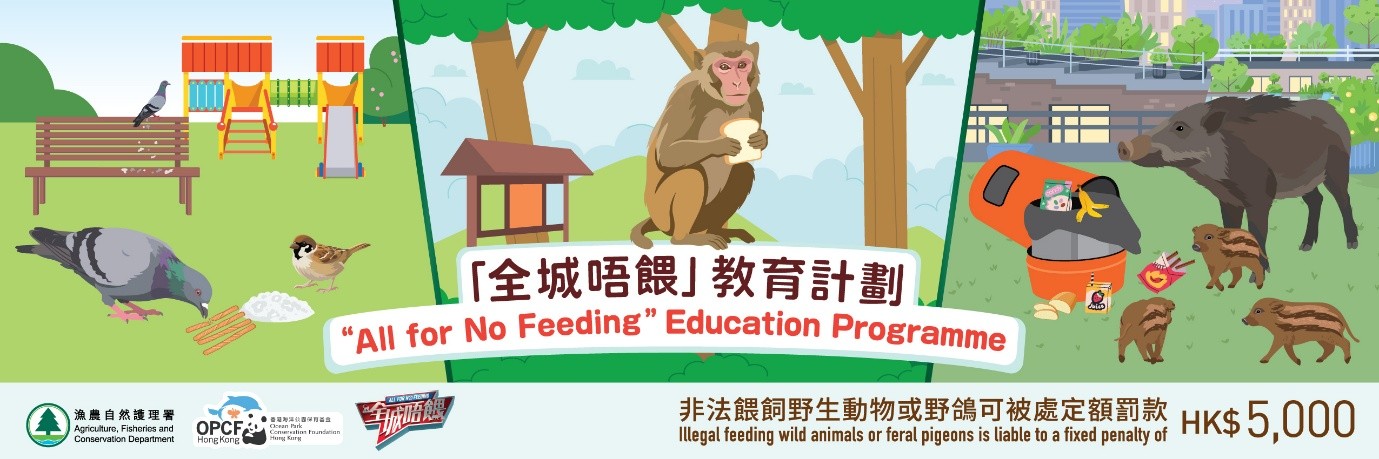
Wild Animals in Hong Kong
With Hong Kong being a small city with dense human population, many people may overlook her rich biodiversity. In fact, there are many terrestrial mammals in Hong Kong, with more than 50 species recorded, including monkeys and wild pigs.
Monkey
Monkeys in Hong Kong are mainly distributed in Kam Shan, Lion Rock, Shing Mun Country Parks. The predominant species is the Rhesus Macaque (Macaca mulatta) with some hybrids between this species and the Long-tailed Macaque (M. fascicularis). Although Hong Kong falls within the natural range of the Rhesus Macaque, it is believed that the original wild population have become extirpated. The existing monkey populations are considered as the descendants of individuals introduced to the Kowloon Hills (i.e., Kam Shan and Lion Rock Country Parks) in the 1910s.
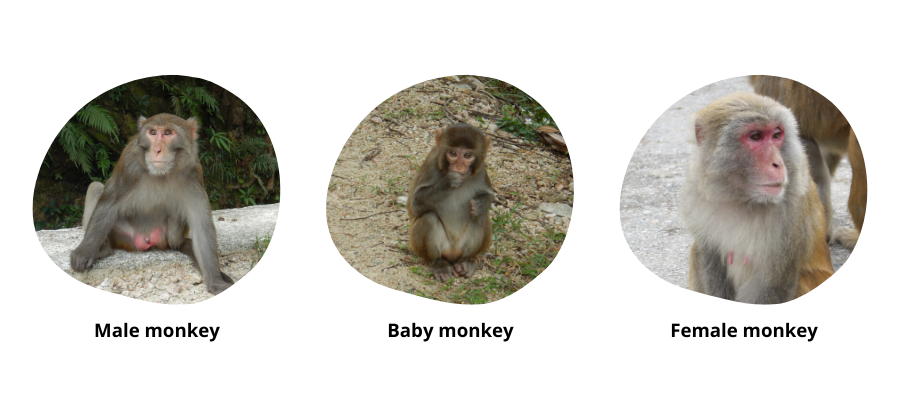
The monkey population in Hong Kong is estimated to be around 2,000 to 2,100 individuals. They are divided into around 30 troops, ranging in size from about 10 to over 200 monkeys. Their natural diet is diverse and includes various parts of plants such as leaves, flowers, fruits, shoots, roots, and barks, and they also prey on insects and other small animals. In addition, the AFCD has extensively planted trees in country parks to provide monkeys with an abundant supply of natural food.
Fun facts:
- Monkeys would store food in their cheek pouches like hamsters.
- Grooming one another, is a friendly behaviour and one of the social activities among monkeys.
- Opening mouth and jumping towards human is a part of their defensive behaviors; however, they usually do not attack if direct gazing is avoided.
- Their face and rump will become redder during oestrus and mating seasons.
Wild Pig
Wild Pig (Sus scrofa) is the largest native terrestrial mammal in Hong Kong with adults weighing up to 200 kg and reaching a body length up to 2 m. They have thick and short bristly coats of brownish grey to black colour. Young wild pigs are born with distinctive chocolate and cream-coloured stripes along their torso. This pattern fades gradually within the first six months to a year.
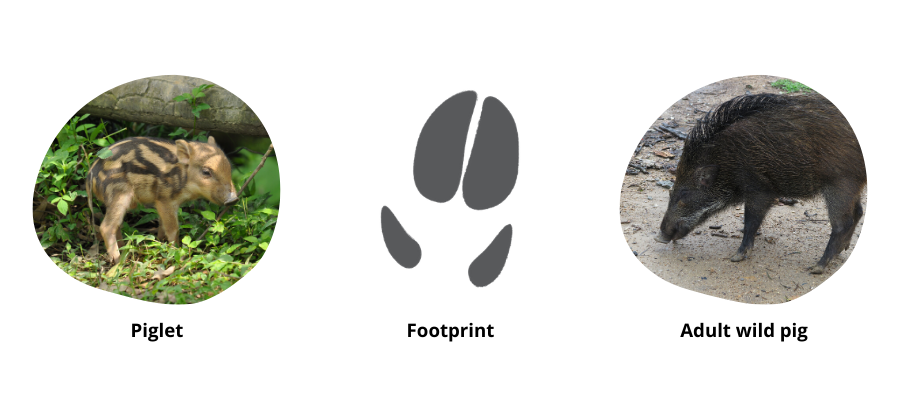
Wild pigs are opportunistic omnivores that feed on plant bulbs, roots and tubers, as well as small animals like earthworms and insects. They are also good swimmers.
Fun facts:
- They are active day and night.
- Adult males are solitary while adult females flock with piglets.
- Wild pigs have strong reproductive capabilities. An adult female can produce one to two litters per year, with each litter consisting of 4 to 6 piglets.
- Wild pigs sometimes wallow in mud, which helps with cooling, sun protection, and parasite removal.
Wild Birds
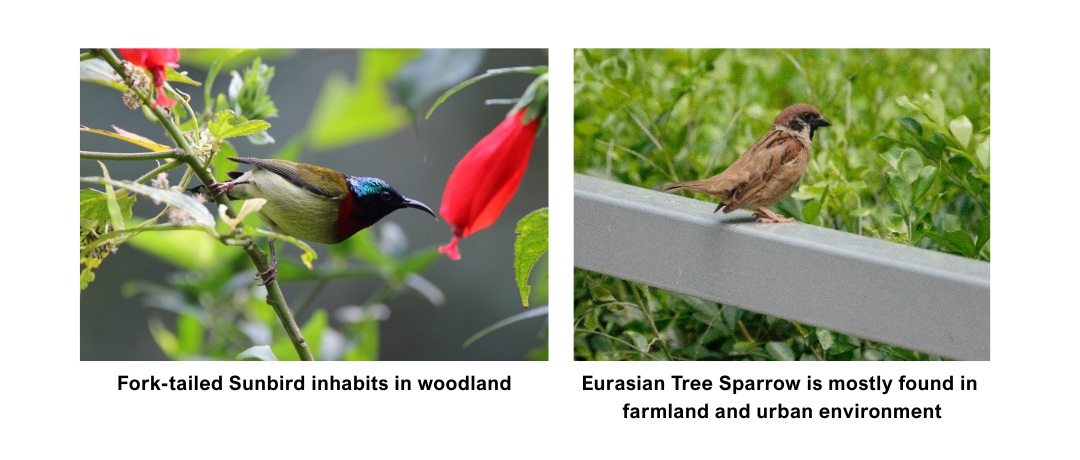
The various habitats in Hong Kong attract a high diversity of birds, contributing to over 580 bird species in Hong Kong. They can be found anywhere, woodland, wetland, field and even urban area.
Different habitats also provide birds with a rich and diverse variety of foods, such as insects, fruits, seeds, nectar, and fish.
Fun facts:
- Bird bodies are like custom-made utensils designed for their favorite foods, evolved over millions of years to develop forms that facilitate hunting and eating. For example, the Fork-tailed Sunbird with a long and downward-curving beak, which can extend into flower tube to extract nectar. Each species bears witness to the exquisite design of nature!
- Apart from their beaks, the feet of birds also adapt to different habitats, evolving structures suitable for their activities. For example, the Great Egret has relatively long toes, which help distribute its body weight, allowing it to walk easily in water; when walking on muddy ground, it also prevents its feet from sinking into the mud.
- The number of bird species recorded in Hong Kong is equivalent to about 40% of the total number of wild birds in Chinese Mainland. Among these species, about 20% are residents, 30% are winter visitors, 40% are passage migrants and 5% are summer visitors as well as remaining about 5% are vagrant/occasional visitors.
Issues Brought by Feeding Wild Animals
- Wildlife loses its natural fear of humans, causing them to learn to beg for food, potentially leading to aggressive behavior.
- Wildlife become increasingly dependent on humans for food.
- Raided rubbish bins and animal excrement can lead to environmental hygiene problems.
- While foraging or roaming, they may wander onto roads, compromising road safety and their own safety.
- Overfeeding can lead to an imbalanced diet for wild animals, leading to health problems.
Wild Animals Protection Ordinance
To further curb illegal feeding activities, the Government has submitted the Wild Animals Protection (Amendment) Bill 2023 (“the Bill”) to the Legislative Council in November 2023. The Bill extends the feeding ban on wild animals to also cover feral pigeons; increases the maximum penalty for illegal feeding to a fine of $100,000 and imprisonment for one year; introduces a fixed penalty system with a fine of $5,000 for illegal feeding; and expands the categories of enforcement officers. The Bill has been passed by the Legislative Council and has come into effect on 1 August 2024.
“All for No Feeding” Education Programme 2025-26
In 2025–26, the OPCFHK will continue to educate the public through various activities on how to coexist harmoniously with wildlife and promote the message of no feeding.
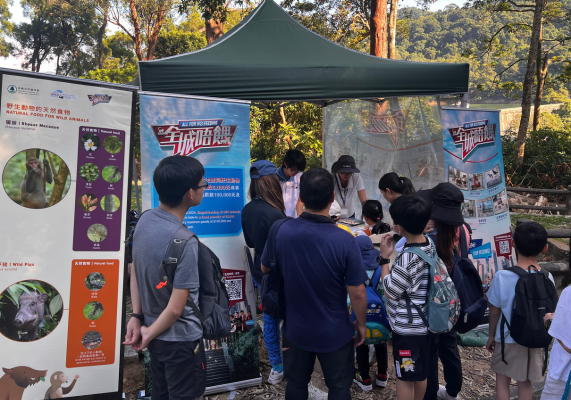
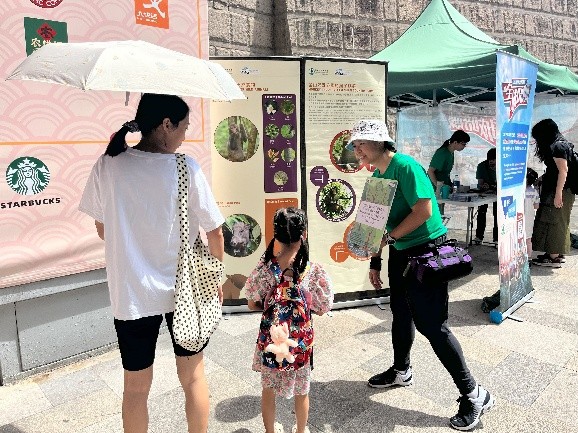
Educational booths
OPCFHK sets up educational booths in country parks and various communities (especially in areas affected by wildlife nuisance or feeding issues) to promote information about no feeding to the public; Meanwhile, through communication with different stakeholders, we can understand the local feeding situation and assist AFCD in gathering intelligence.
Booths time table: https://www.afcd.gov.hk/tc_chi/conservation/con_fau/con_fau_wild_the.html
 |
 |
Outreach workshops
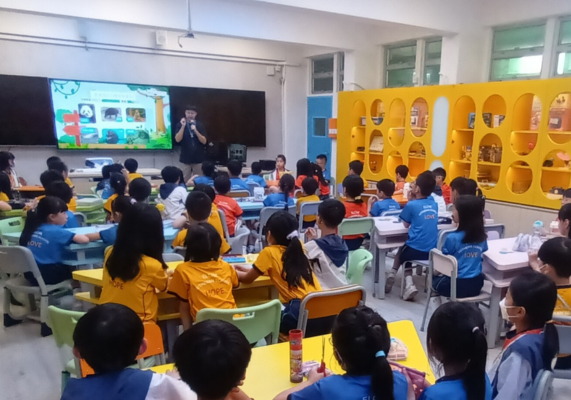
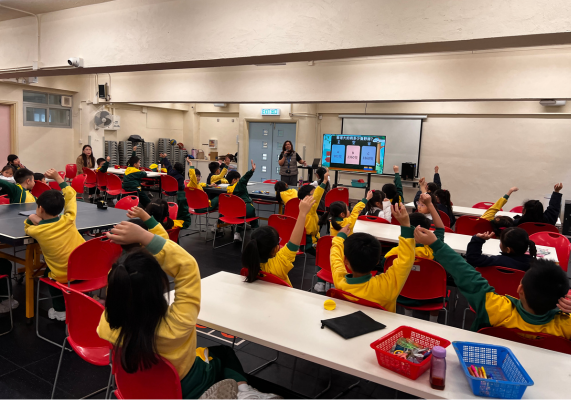
In order to enhance public awareness of related issues, OPCFHK and AFCD have designed outreach workshops suitable for different age groups. The workshops usually include talks and interactive activities, allowing participants to learn in a relaxed and enjoyable atmosphere while raising their awareness about no feeding.
Primary and secondary school workshops focus on the theme "Nature Rules," introducing the habits of wild animals such as monkeys, wild pigs, and wild birds (including their behaviors, natural food sources, and habitats). Participants learn about precautions when encountering wildlife and explore the negative impacts that human feeding can have on both the community and the animals. The lectures also use interactive learning elements, allowing students to engage in role-playing and discussions to gain a deeper understanding of the importance of relevant laws.
 |
 |
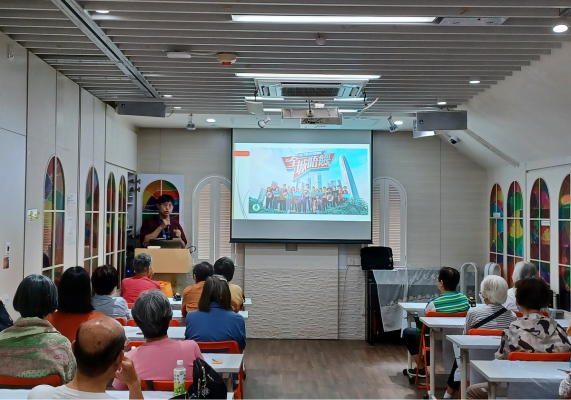
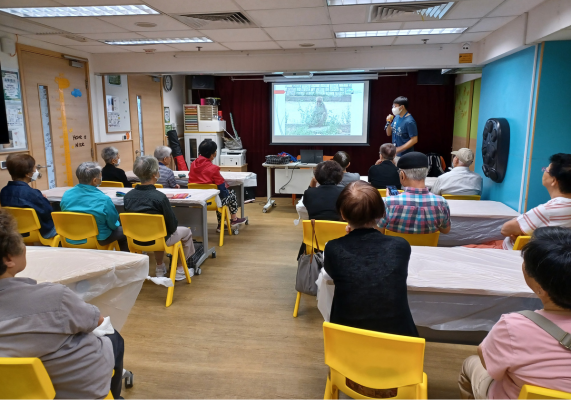
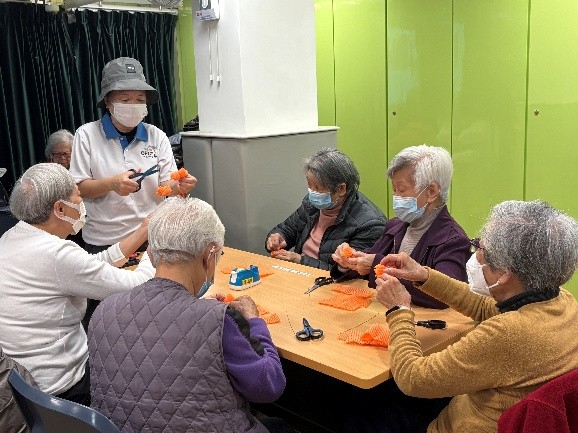
The outreach workshops have been extended to the community in recent years. OPCFHK has designed activities themed “Hong Kong Gordonia” and “Wild animals” for elderly centres and community centers respectively. Through talks and craft sessions, the participants could gain a better understanding of the general ecology and habits of wild animals, and help promote the message of “All for No Feeding” through their artworks.
 |
 |
The workshops are now open for registration. Please complete the below application forms. Limited slots are available and will be allocated on a first-come-first-served basis.
Enrollment forms:
- Workshop for schools (full for 2025-26) https://forms.gle/GWg4djvwTQ7ifgKR8
- Workshop for elderly centrs https://forms.gle/Jc4iXRWmtkCqcKaX9
- Workshop for community centres https://forms.gle/DhQZRAMSJWDkNzZK9
Public Guided Tour - 'Leisurely Countryside' Guided Tour
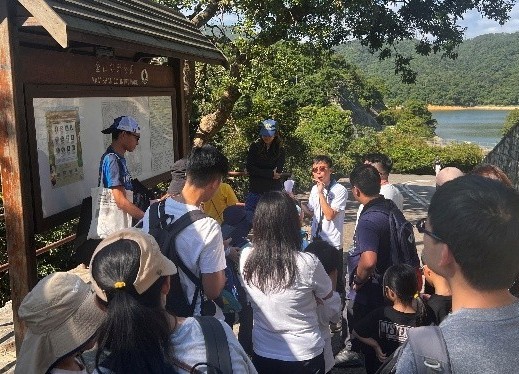
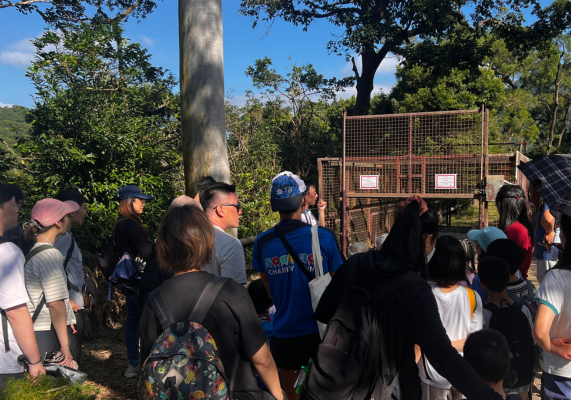
The guided tour is led by staff from the OPCFHK, allowing participants to observe wildlife in their natural habitat (such as monkeys, wild pigs, and birds). The aim is for the public to learn more about the basic habits and ecological knowledge of these animals, observe their behavior and natural food sources, and help participants understand the importance of the “All for No Feeding” initiative.
Enrollment form: https://forms.gle/cP21ab8kepjw1wxo8
 |
 |
Get Involved
Passionate in spreading the words and helping the precious wild life in Hong Kong? Join us and be our volunteer! “All for No Feeding' Volunteer Programme" aims to promote the message of not feeding wild animals whilst engaging the public to be a conservation ambassador For more details, please click here.
 |
 |